Like choosing tiles for the terrace?
Terrace surfaces must be resistant to low temperatures, abrasion and must also be non-slip. Frost resistance is closely linked to lower water absorption. (Tiles that absorb a lot of water will crack during frost). The material laid on the terrace should have a soakability of less than 3-4%. An abrasion-resistant surface is advisable in such an area, as it will certainly get dust from the ground. On the terrace, tiles with at least abrasion class III (PEI) will work well. It is good to pay attention to the fact that they should also be slip-resistant, i.e. at least class R10. The slip resistance is related to the structured, textured surface. Glazed tiles, especially when wet, are slippery.
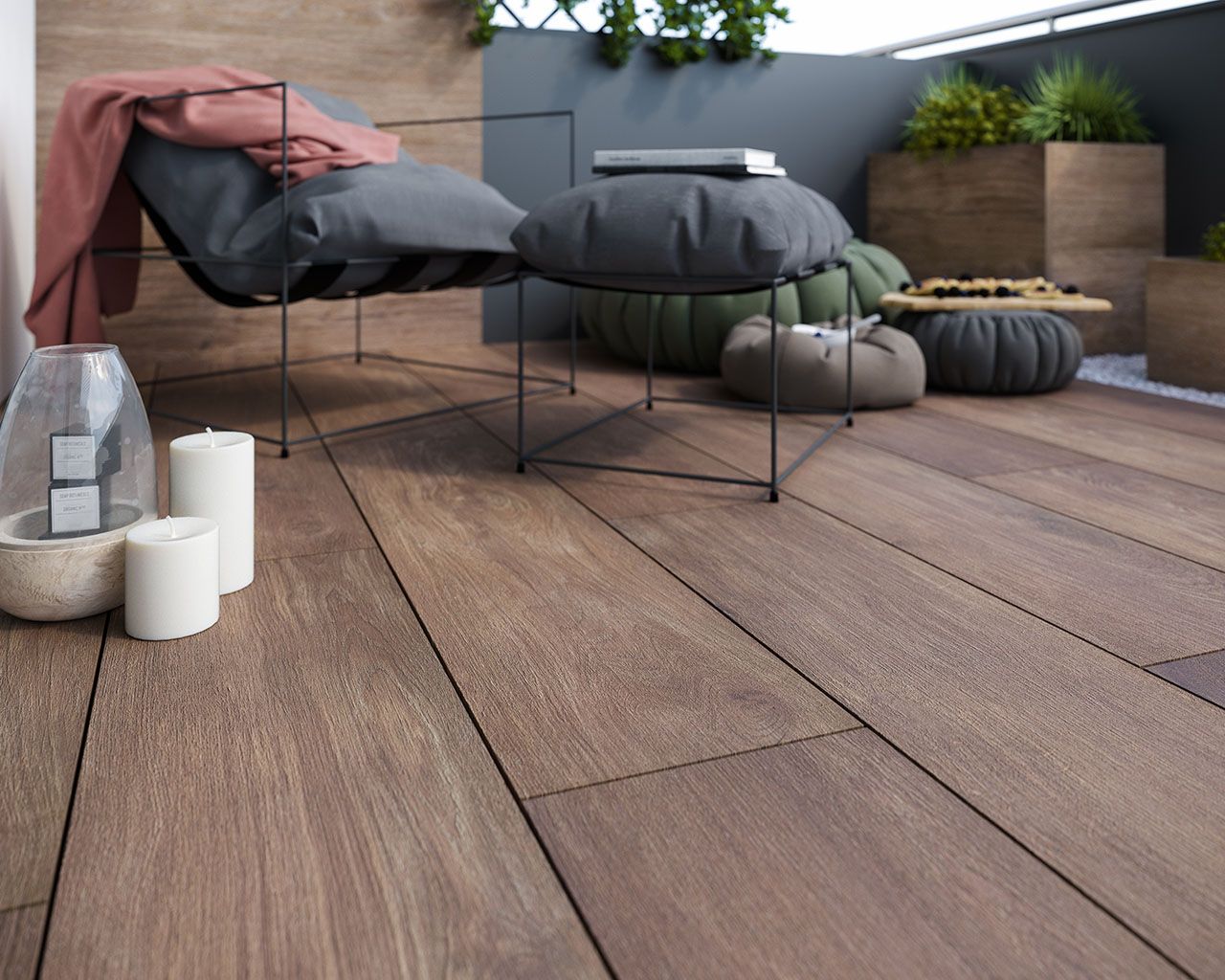
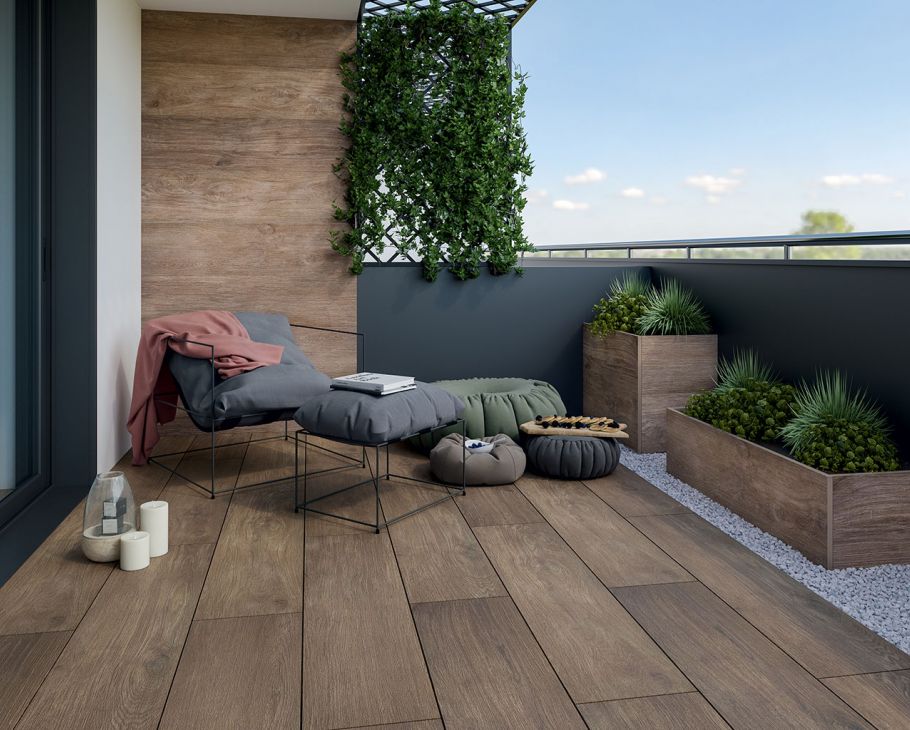
Porcelain stoneware tiles are often laid on terraces. They are very durable, resistant to mechanical damage, resistant to temperature differences and have a low degree of absorption - even less than 0.1%. The top side of porcelain stoneware tiles can be finished in several ways, it can be polished or glazed, i.e. covered with an extra layer of glaze or natural. The big advantage of porcelain stoneware tiles is their smooth texture, so they are resistant to dirt, detergents and acids in basic concentration. Porcelain stoneware can be finished in many ways, so there are many interesting collections: single-colour, patterned, with interpenetrating colours, imitating wood, imitating stone, etc.
Stoneware tiles vary in thickness according to size. The most common one is 6-10 mm. More recently, very thick porcelain stoneware slabs - referred to as 2.0 - with a thickness of 2 cm have been available in the shops. Thin (e.g. 6 mm), yet very large stoneware slabs (e.g. 80 x 160 cm) are a hit in recent seasons.